[This is a deeper dive into one of the author’s stories found in “How A Man Not Named Dan Came to Own Dan’s Cafe for Six Decades,“ published June 10th in the Washington City Paper. For a deeper dive into who Dan was, click here. For more details about Dan’s Cafe and Dickie DIckens (including pictures) click here.]
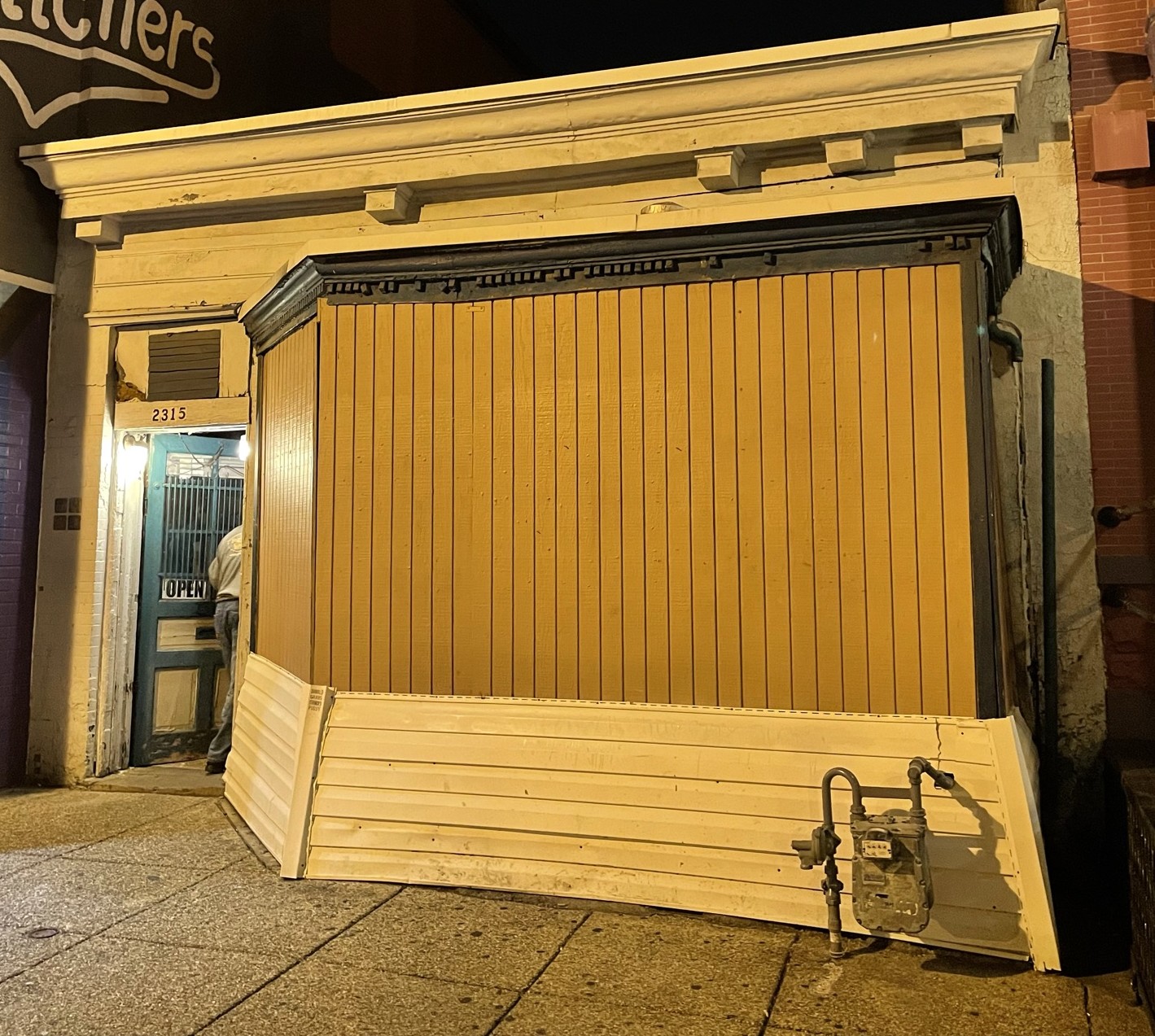
Ten minutes before midnight on Friday, April 8, 1955, the 63 year old owner of a Washington, D.C. tavern picked up the .32 caliber revolver stowed behind the bar, strode around, and fired 3 times. The owner’s tavern was located in the neighborhood known today as Adams Morgan, at 2315 18th Street Northwest, a building which today houses the legendary Dan’s Cafe. On this fateful night, however, this bar owner was not named Dan—the infamous establishment known today for its airplane and squirt bottles full of booze, no-nonsense service, questionable restrooms, and general debauchery would not open until the following year. No, his name was John Suber, who, along with his 68 year old wife Bessie, with help from their 42 year old son Vincent, had run Suber’s Restaurant for over three years. But on this chilly spring night, a 24 year old Army veteran lay dying on the floor in their establishment, struck twice by the bullets from John Suber’s weapon.
This was not the first time the Subers had been involved in violence during the decade. In early January 1950, Vincent Suber found himself in a fight with 26 year old Howard Johnson. It did not turn out great for the younger Suber, who was a decade older than his combatant – Johnson bit one of Vincent’s ear off. Luckily for him, doctors were able to sew the ear back on later that night, and Johnson was charged with “mayhem.” (Suber later no-showed for an appearance to testify against Johnson, and it’s not clear if Johnson was ultimately punished.)
In May 1952, the elder Subers, who lived at 1809 Kalorama Road, bought a building at 2315 18th St. around the corner. The building already housed a restaurant called Virginia’s, which the Subers took over. Less than a year later, on February 23, 1953, three 17-year olds entered their restaurant at 2:20 a.m. One of them flashed a .32-caliber revolver (yes, the same type of weapon used by Suber 2 years later) and robbed John of $111 (~$1,336 in 2025 dollars) from the cash register, an envelope, and his pocket. The teenagers then forced John out the back, ordering him to run down the alley. He complied and ran; nevertheless, one of the teens fired three shots at John’s heels anyways, with one of the bullets ricocheting off the ground into one of his legs. He was treated at a hospital, released, and identified the perpetrators (the “sadistic young bandits”, as one DC newspaper, The Evening Star referred to them on page 1), who were subsequently arrested.
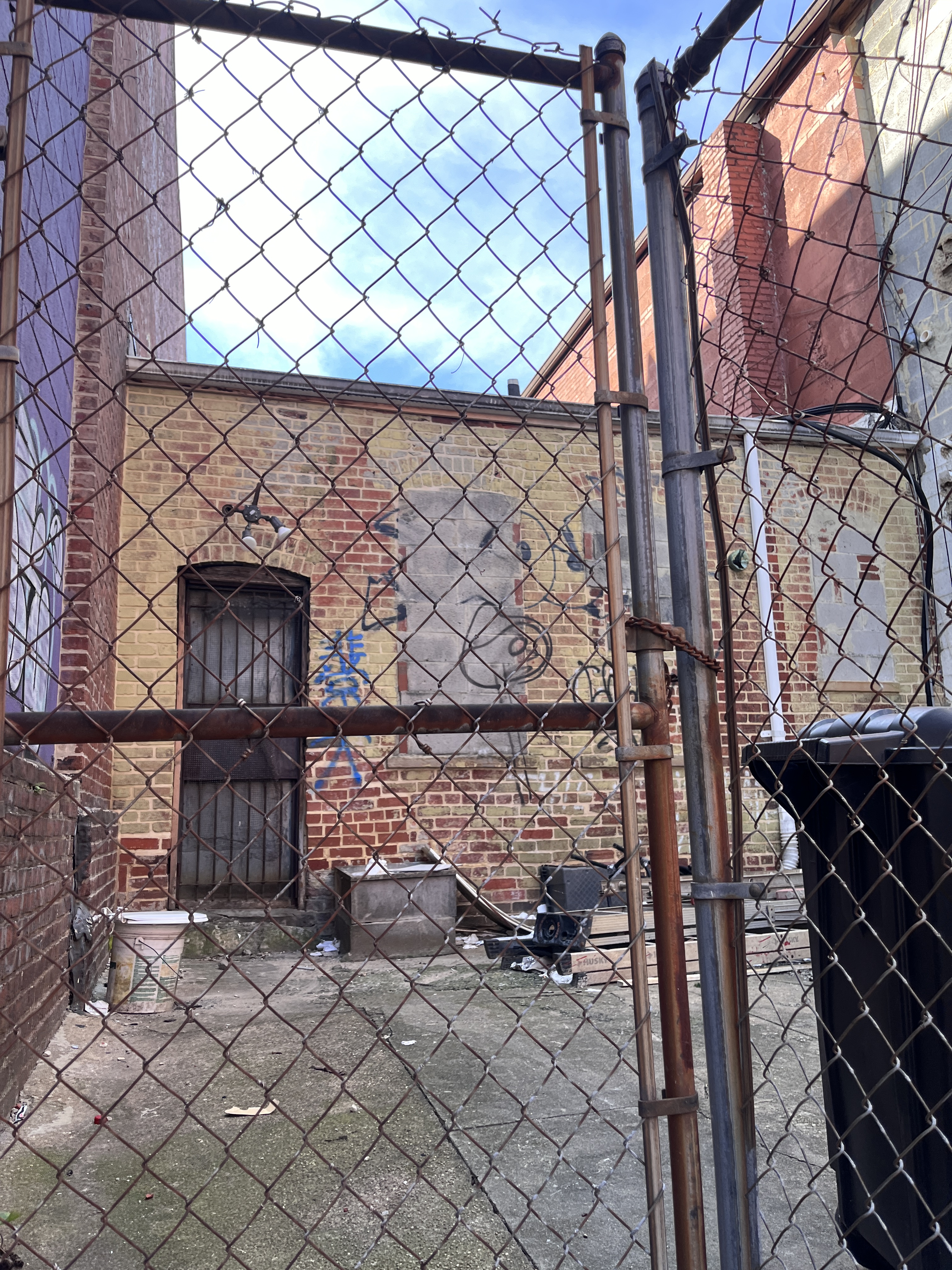
Despite this distressing experience, the Subers kept the restaurant going. One waitress who worked for them was Helen Martin, who also lived nearby, at 1871 California St. NW. In fact, Martin had worked in the same building since around 1948 under a succession of owners; first when the spot was called Charlie’s and one of the first Black-owned restaurants in the neighborhood. At some point, she began dating a customer, a 24 year old Army veteran named Charles Henry Watson, who also resided in the neighborhood, living just down 18th Street at The Louisiana apartment building (today the site of the Marie Reed Community Center’s tennis courts). One of seven children, Watson hailed from the town of Harrisonburg, Virginia a few hours to the west, today well known as the home of James Madison University. Before moving to the area, he had been honorably discharged from the U.S. Army Signal Corps as a non-commissioned officer at the rank of Corporal.
However, after a visit by Watson during the first week of April to his establishment, John Suber added Watson’s name to some scrap paper. The scrap paper, the back of a Riggs National Bank deposit slip, was not a place where a patron wanted their name listed. Watson had multiple outbursts and other difficulties at the establishment, including ordering and eating a fish sandwich but refusing to pay for it. So Suber officially barred Watson from the restaurant, and his name on the back of this deposit slip served as notice of the barring.
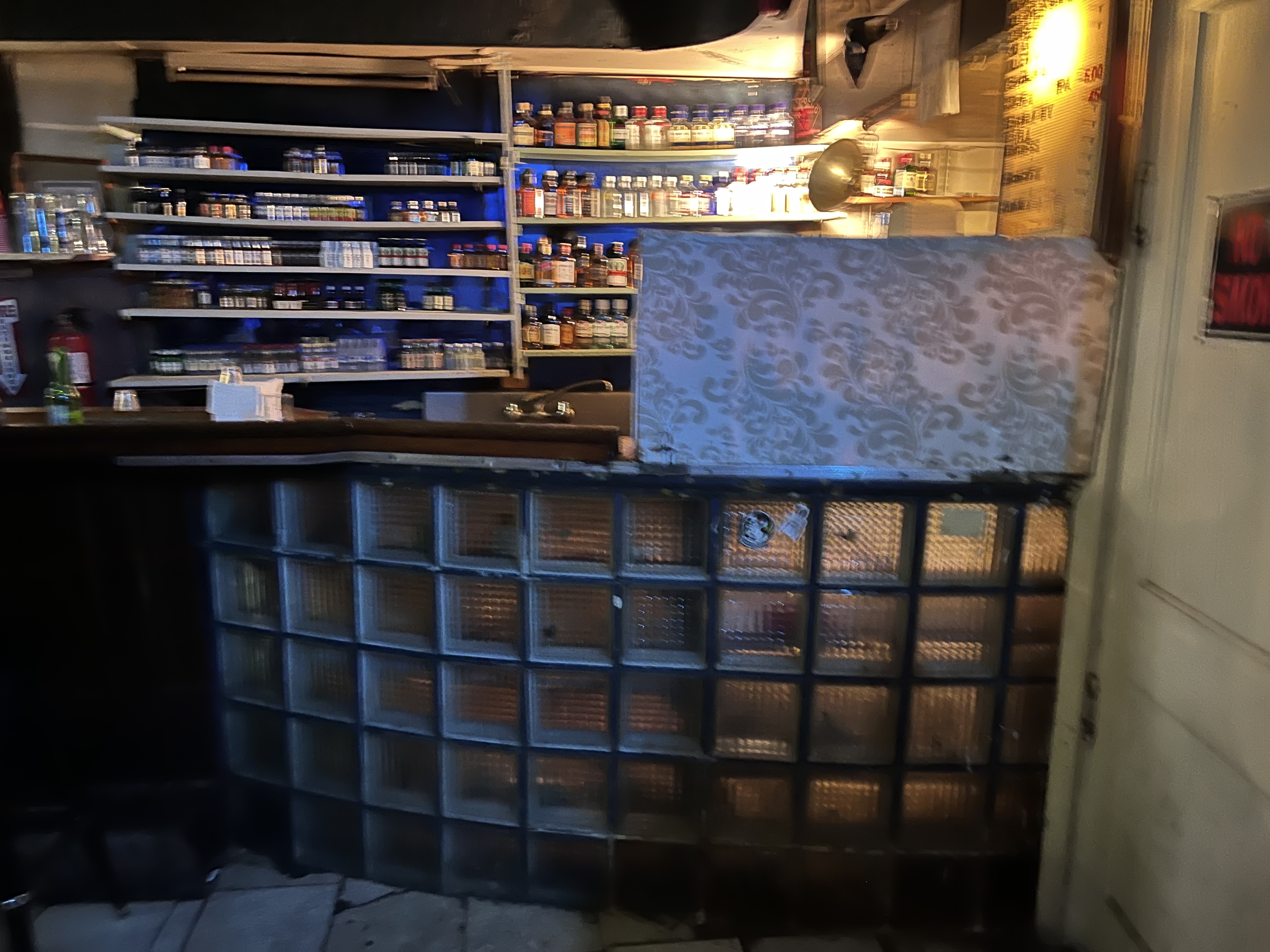
Despite this ban, Watson returned a few days later. As the clock neared midnight on Friday, April 8th, Watson stood by one of the tavern’s booths talking to friends. Vincent Suber ordered Watson to “sit down.” Watson refused. The two then started fighting (“grappled” as one newspaper recounted). John Suber would later contend that, at this moment, he felt that his son was in imminent danger of serious bodily injury. The elder Suber then retrieved his gun from behind the circular service bar in the rear (half of which still stands today in the corner of Dan’s) and walked around to the front of it. Just as an onlooking customer separated the two men fighting, Suber fired the revolver three times, striking Watson’s chest twice.
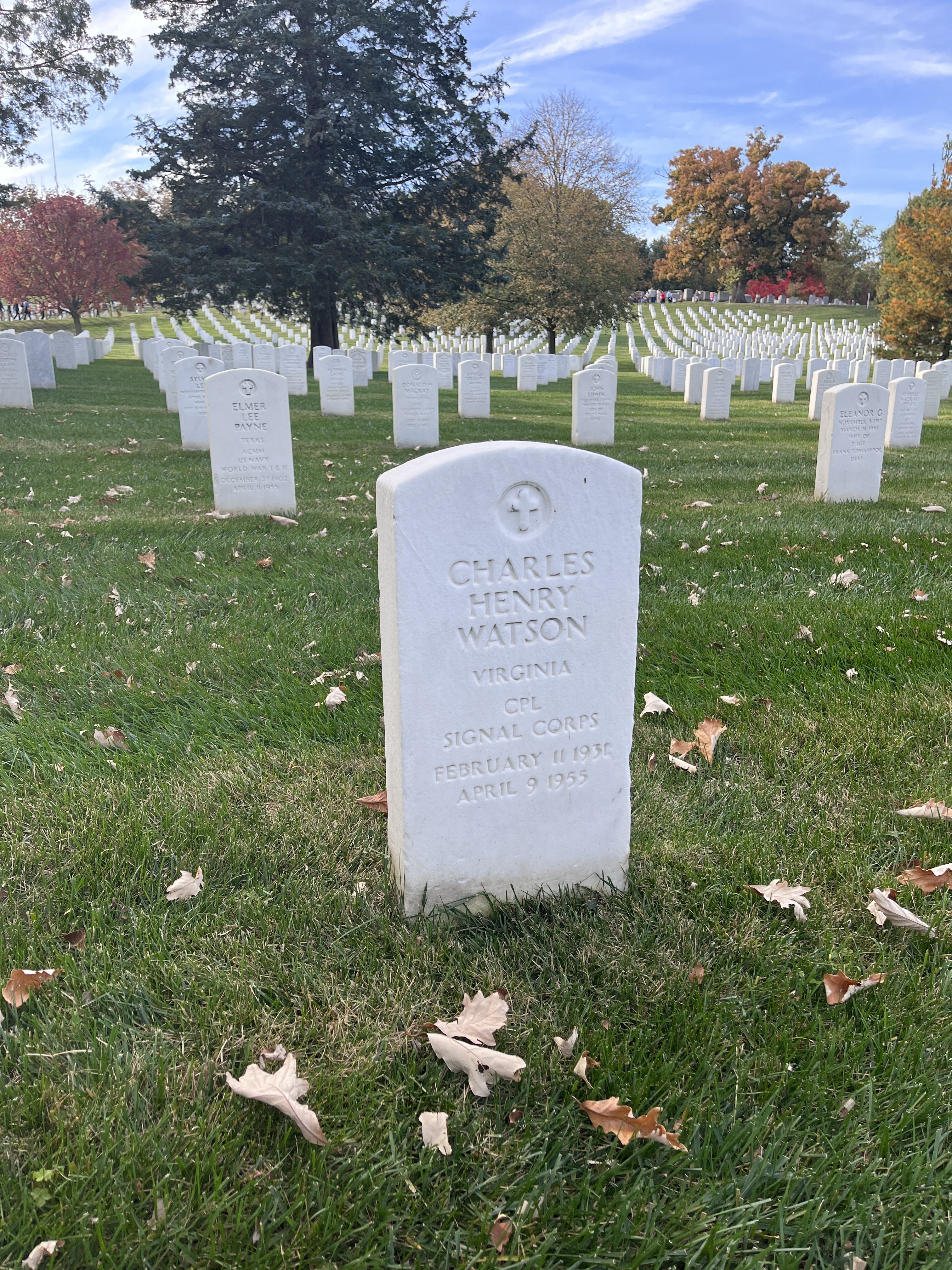
Watson was rushed in a taxi a mile east to the Garfield Memorial Hospital at 11th and Florida NW (which closed 3 years later and is now site of public housing and an elementary school). Dr. Otto Senft pronounced Watson dead at 12:04 a.m., on Saturday, April 9, 1955, less than 15 minutes after he was shot. He was buried five days later on Thursday, April 14, 1955, laying at rest across the river at Arlington National Cemetery, just steps away from today’s visitor’s center and within eyeshot of the burial site of the Kennedy family. Several of Watson’s siblings settled in the DC area-the last surviving one (Harold) died at the age of 84 in 2019, after serving many years as a United Methodist pastor. Their sister Lucille became prominent in Harrisonburg/Rockingham County history when her children were the first to integrate local schools in 1964 (the local school even created a documentary).
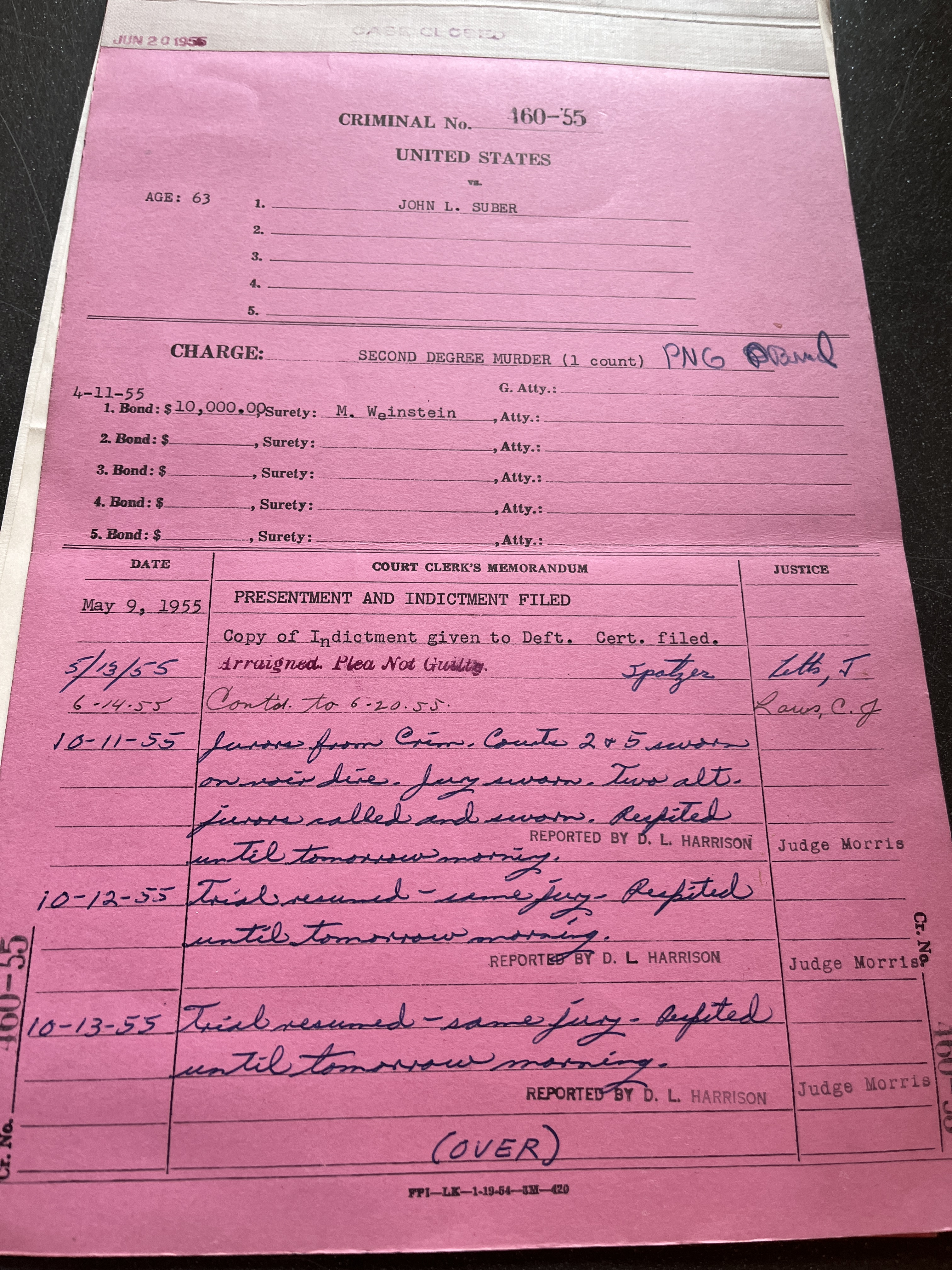
Meanwhile, John Suber was arrested, charged, and later indicted for 2nd degree murder, for murdering Watson “with malice aforethought … by means of shooting him with a pistol.” He pled not guilty and was released on $10,000 bond (~$120,000 in today’s dollars). Suber hired Thurman Dodson to represent him. Dodson, who was Black (like Watson and the Subers) and well known in DC and Republican politics as a highly regarded lawyer. (Dodson later represented the NAACP in a sensational 1957 hearing in front of the District’s Federally appointed commissioners that alleged police brutality on part of MPD)
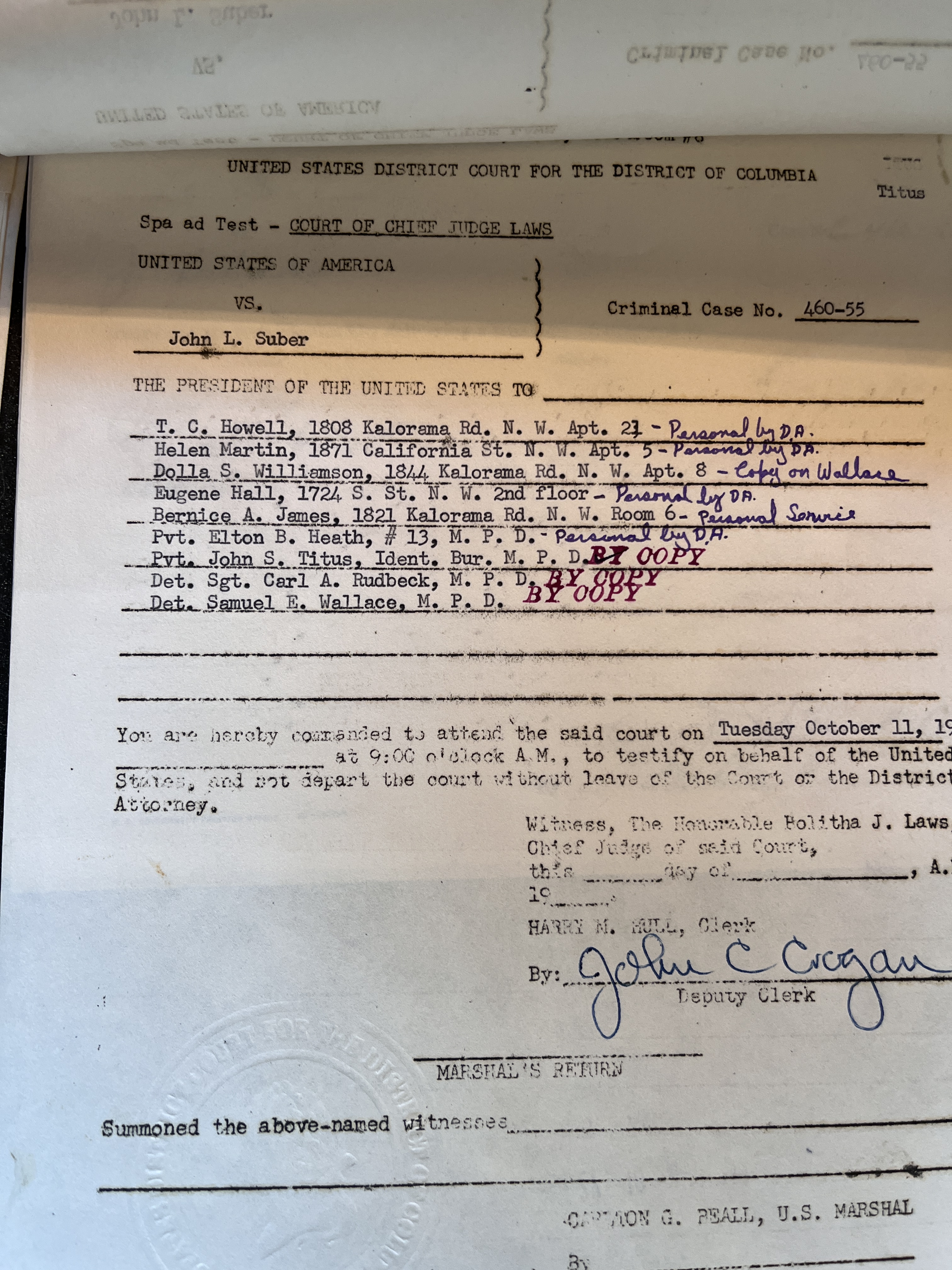
The murder trial presided by Federal district judge James Morris started on October 11, 1955, six months after Watson’s death. Despite a 50/50 gender-balanced jury pool to choose from, only 1 woman was impaneled on the jury of 12 (plus 2 alternates). At the trial, Dodson argued that Suber had acted in self-defense because he reasonably feared that his son would suffer bodily injury or worse, and that the Suber men were legally allowed to use reasonable force to eject someone from the premises. During the trial, witnesses, including Vincent Suber, testified that Watson had caused trouble in the establishment previously and had been banned. Exhibits introduced at the trial included the revolver itself, and photos of the establishment, as well as an incriminating statement made by John Suber to MPD and the Riggs National Bank deposit slip that listed Watson as banned from the premises. After a little more than 3 days of trial, on October 14th, the jury deliberated, and found Suber not guilty of 2nd degree murder, but guilty of the lesser charge of manslaughter.
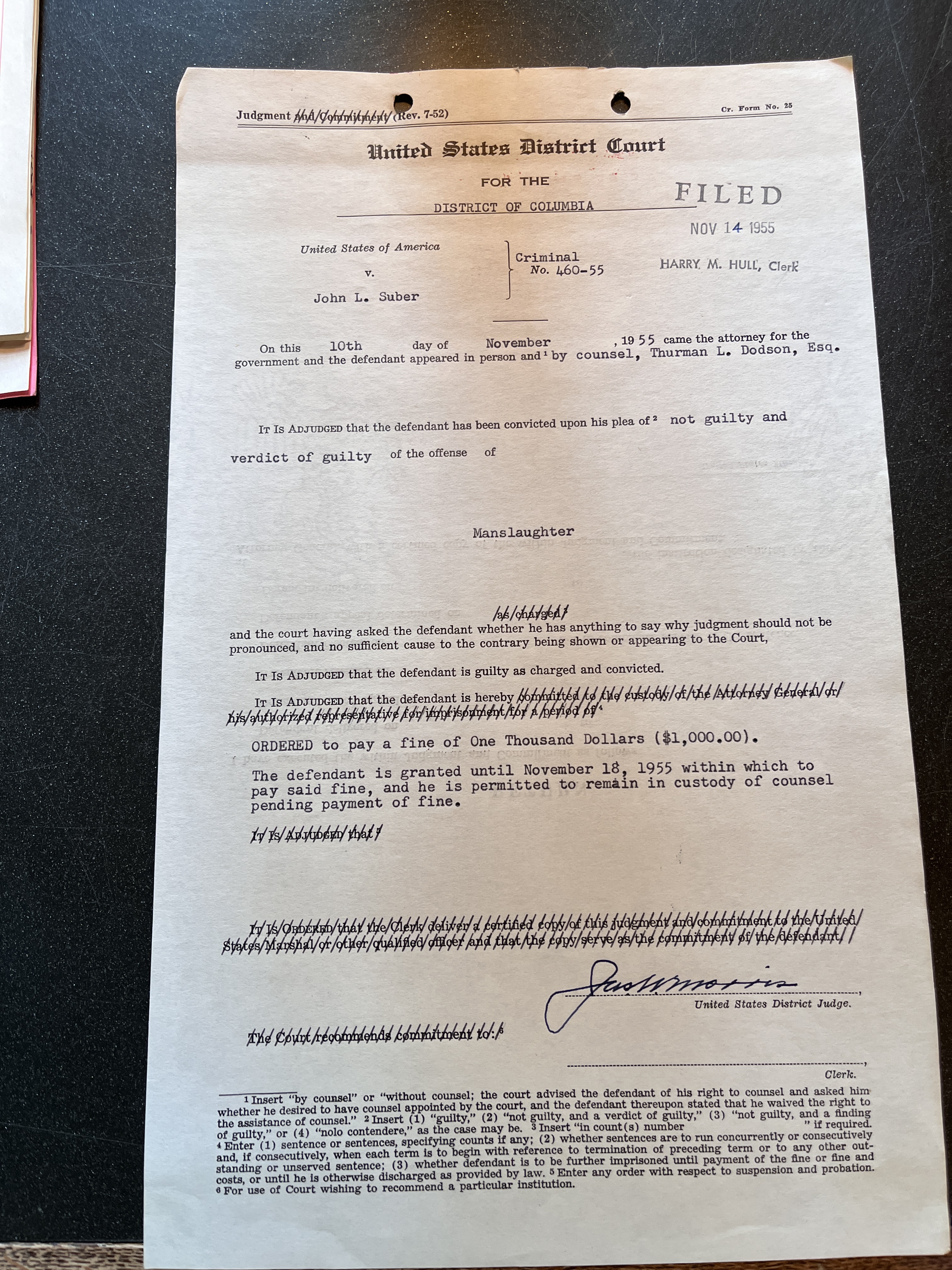
Before sentencing, Dodson submitted certificates from medical professionals stating that, based on Suber’s poor health, even a short imprisonment might endanger his life. On November 11, 1955, Judge Morris, after reviewing those medical certificates, and taking into consideration other facts of the case, issued his sentence to Suber: No jail time and a $1,000 fine (~$12,000 in today’s dollars), which was paid later that month.
Consistent with the medical certificates, John Suber did not live for much longer, passing away at the age 66 a couple years later in July 1958. Suber’s Restaurant kept open despite John Suber’s legal troubles, but lasted only one more year, as Dan’s Cafe was in business by mid-1956 – with Bessie (who Dickie Dickens, the longtime owner of Dan’s Cafe, referred as “rich” owning lots of properties) retaining ownership of the building until 1960.
Dodson, Suber’s lawyer, also gained additional renown two years later in late 1957 when he served as the local NAACP lawyer as part of sensational nine days of hearings held by the District Commissioners (Federally appointed overseers of DC pre Home Rule) to argue on behalf of the NAACP that the MPD police chief condoned brutality and racial discrimination. (In the end, the District Commissioners said the charges lacked evidence, clearing the police chief and giving him a vote of confidence).
[More to come on Dan and Dan’s Cafe]
 Barred in DC
Leave a reply to More Details on Dickie Dickens and Dan’s Cafe – Barred in DC Cancel reply